
🐕 🐾 Coats, Boots and Visibility – Winter Walk Gear Your Dog Actually Needs
The gear minefield
Let’s be honest, the world of winter dog gear can be a minefield. One minute you’re buying a sensible waterproof jacket, and the next you’re wondering if your Spaniel really needs a thermal-lined puffer with faux fur trim. (For the record, probably not!)
Here at Ollie’s Adventure Walks, we’ve tried almost everything over the years while walking dogs across the fields, forests and Downs of East Sussex. From practical, weatherproof layers to hilarious-but-hopeless novelty jumpers, we’ve learned what really works, and what’s best left in the online basket.
So, here’s our honest guide to what your dog actually needs when the temperature drops, with a few friendly tips to keep them comfy, visible and full of energy on every countryside adventure.
First things first — does your dog really need a coat?
It’s a question we get all the time. And the answer is: it depends on the dog, not the temperature.
Some breeds come ready-made for the cold. Think Retrievers, Labradors, Newfoundlands, Collies — all naturally insulated and built for outdoor life. But other breeds, like Whippets, Dachshunds, and short-coated Terriers, don’t have that luxury. They lose heat fast, especially when the wind cuts across an open field.
If your dog starts shivering, hunching up, or lifting their paws on a cold day, it’s time for a coat. The Dogs Trust recommends coats for short-haired, elderly, or unwell dogs during cold or wet weather — and we completely agree.
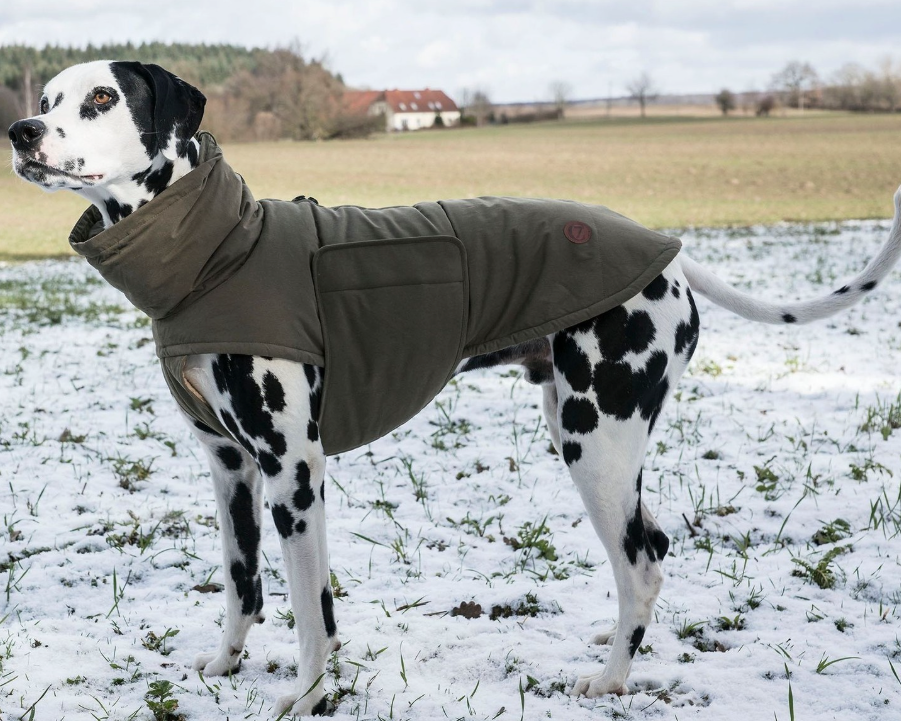
The key is comfort: your dog should be able to move freely, sniff, run, and roll without restriction. A well-fitted coat should feel like a second skin, not a costume.
What makes a good winter coat?
There are hundreds on the market, but the best dog coats all share a few things in common:
Waterproof outer layer – essential for damp days, sleet, and drizzle.
Fleece or thermal lining – traps warmth while allowing breathability.
Adjustable straps – for a snug but comfortable fit.
Reflective detailing – a must for low-light winter afternoons.
If you walk as much as we do, look for a durable coat that’s machine-washable and quick-drying. There’s nothing worse than trying to wrangle a damp jacket onto an excited dog at 8am.
Some of our regular walkers swear by Hurtta, Ruffwear, or Ancol’s “Stormguard” range: simple, practical, and built for real adventures, not Instagram photo ops.
The boot debate
Ah, dog boots. For some dogs, they’re life-changing; for others, they’re an absolute no-go.
Boots can be great for older dogs or those with sensitive paws, especially on frozen or rocky ground. They protect from salt, grit, ice, and sharp stones, and can prevent cracking or frostbite during very cold spells.
But, and it’s a big but, dogs need to feel the ground to move naturally. If boots are too stiff or loose, they’ll end up doing that hilarious high-step dance that says, “What have you put on my feet?”
And then there’s the great boot mystery every countryside dog owner knows: no matter how carefully you fit them, there’s always a chance one will vanish somewhere between the field gate and the bridle path. We’ve had more than one walk turn into an impromptu treasure hunt trying to find a lone boot half-buried in the mud!
If you do try boots, make sure they’re:
Properly fitted (snug but not tight)
Secured with double fastenings or Velcro straps
Checked after 10–15 minutes of walking
Our advice? Try them gradually. Start indoors for a few minutes, reward generously, and build up. And if your dog absolutely hates them, a good paw balm (like Musher’s Secret) can be just as effective for shorter countryside walks.
Seeing and being seen
Out in the countryside, visibility is one of those things you don’t think about until you suddenly can’t see your dog. Shorter winter days mean we’re often walking in softer light, golden mornings or dusky afternoons where a reflective harness or LED clip can make all the difference.
High-visibility leads and collars are helpful, especially in wooded areas or on bridleways where cyclists or horse riders might appear. Reflective gear isn’t just about your dog, it helps you keep track of them in tall grass or fog.
Here’s what we recommend:
Reflective collars and harnesses – double the visibility, double the safety.
Clip-on LED lights – cheap, lightweight, and brilliant for spotting dogs at a distance.
Bright colours – yellow, orange, or neon pink really pop against dull winter landscapes.
The ManyPets winter walking guide also points out that high-vis gear helps drivers see dogs earlier on rural roads, an easy fix for a big safety boost.
Our countryside must-haves
After years of exploring muddy trails, frosty fields, and forest paths, here’s what always earns a spot in our winter gear bag:
A waterproof dog coat for those thin-coated breeds.
Microfibre towel for drying off after muddy runs.
Paw balm to protect against cold and grit.
Reflective harness and lead for visibility.
Spare lightweight blanket in the van for after the walk.
No gimmicks — just good, practical kit that works for every dog and every walk.
A word about owners, too
We always say that the right gear isn’t just for the dogs! Dog walkers need to stay comfortable too, after all, a frozen human isn’t much fun company.
Our winter staples? Thermal gloves that work with leads, waterproof walking boots (you’ll thank yourself after the fifth muddy field), and layers that breathe. A flask of something hot never goes amiss either.
The better prepared you are, the more relaxed and enjoyable the walk becomes — for both ends of the lead.
Finding the fun in the frost
Winter walks don’t have to be about endurance. With the right gear, they’re a chance to experience the countryside at its most beautiful; mist rising over the fields, the crunch of frost underfoot, the quiet calm of nature taking a breath.
When everyone’s dressed right, the cold fades into the background, and all that’s left is the joy of movement, freedom, and fresh air.
That’s why we treat gear not as a chore, but as part of the ritual, the little preparation that turns a walk into an adventure. Because whether it’s rain, frost or golden winter sunshine, our dogs don’t care about the weather, they just care that we’re out there with them.
Related reads:
👉 Safe walks: How cold is too cold to walk your dog?
👉 Festive season: Dog home boarding at Christmas
When it’s too cold to walk, we’ll make sure your dog still gets the exercise and care they need — safely and happily. 📅 Book your winter walk, home barding or daycare today.
Call Ollie on 07979 491808 / Louise on 07882 655416 to discuss your requirements., or email us on hello@olliesadventurewalks.com